

Subscribe to RSS
 Download PDF

DOI: 10.1055/a-2576-7760
Personalized Medicine, Public Health and Patient-Centred Aspects in the Prevention of Stroke in Intracerebral Haemorrhage Survivors with Atrial Fibrillation (PRESTIGE-AF) Project
Authors
Introduction
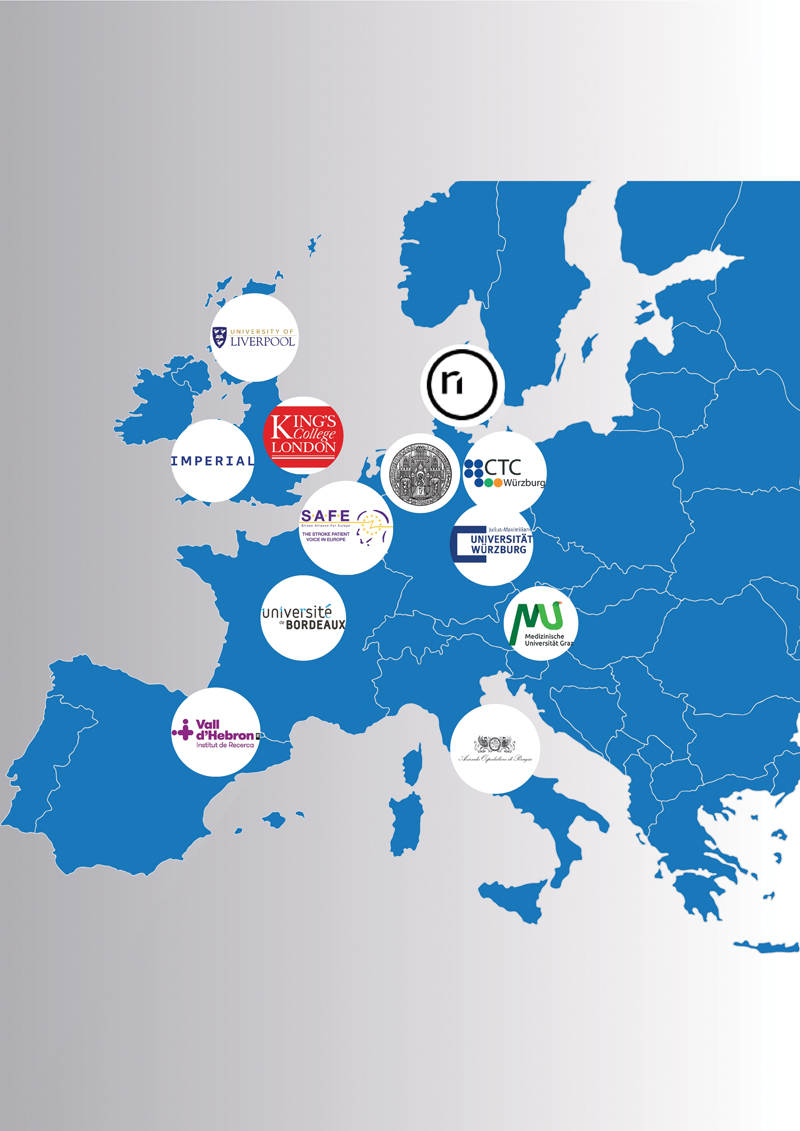
Although systematic reviews and meta-analysis of observational studies have suggested a benefit of oral anticoagulation (OAC) for ischaemic stroke prevention without a significant increase in recurrent ICH, experts agree that more evidence is required from randomized controlled trials (RCTs).[1] [2] PRESTIGE-AF is a European Union Horizon 2020 funded project with a consortium of 12 institutions across 7 countries since 2019 ([Fig. 1]). The aim is to explore optimal stroke prevention strategies for intracerebral haemorrhage (ICH) survivors with atrial fibrillation (AF), investigating the balance between the risk of ischaemic stroke against the risk of recurrent ICH.
The complexity of clinical management in ICH patients with AF is compounded by differences in clinical and patient characteristics, such as stroke severity, risk factors, and socio-demographics. Consequently, it is unlikely that RCTs alone will provide a solution for stroke prevention that will fit individual patients. Therefore, in addition to the main RCT, PRESTIGE-AF is examining how blood-based biomarkers, genetic factors, neuroimaging, and clinical features can be used to personalize stroke management. We are also exploring patient-centred aspects which can influence medication use and clinical trial participation. The project overview is shown in [Fig. 2]. Clinical trial results can have a broad impact on health policy. This will be addressed within the project by modelling the health economic impact of our results and exploring if our findings are generalizable to a European population.

Randomized Clinical Trial
The PRESTIGE-AF randomized clinical trial used a prospective, randomized, open, blinded end-point assessment (PROBE) design to determine the optimal antithrombotic management in patients with ICH and AF. Participants in the intervention arm received a direct oral anticoagulant (DOAC) compared with a control group who received either no therapy or an antiplatelet (at the investigator's discretion). Randomization occurred in a 1:1 ratio, stratified according to sex and ICH location. Between May 2019 and November 2023, a total of 319 participants were enrolled by 63 recruiting sites across 6 European countries and followed-up for a maximum of 36 months. The co-primary endpoints of ischaemic stroke and recurrent ICH will be tested hierarchically.
Personalized Prevention Strategies
PRESTIGE-AF is also exploring personalized stroke prevention strategies using blood-based biomarkers, genetics, pharmacological, centrally analyzed neuroimaging, and a clinical risk prediction model.
Immunoassay techniques are being used to assess blood-based biomarkers (including NT-proBNP, cTn-hs, GDF-15) in a subgroup of the clinical trial participants who provided informed consent to evaluate ischaemic and ICH risks. A smaller proteomic study will also explore new biomarkers for ischaemic stroke and ICH, with promising candidates validated in the full cohort. PRESTIGE-AF has created a stroke patient blood biobank, both for discovery of new biomarkers and for testing of known candidates. We aim to develop a point-of-care device to apply these biomarkers in clinical settings, providing a tool to guide anticoagulation therapy and improve personalized treatment.
Using a subgroup of participants who underwent genetic testing, we are investigating whether AF or stroke-associated genetic variants, combined in polygenic risk scores (PRS), are related with risk of ischaemic stroke or ICH recurrence in our cohort. We are additionally investigating the association of MRI markers of cerebral small vessel disease (cSVD) PRS with risk of ICH recurrence or risk of ischaemic stroke.
It is well documented that blood concentrations of DOAC vary across patients; however, there is little evidence on the effect of this on patient outcomes, and the implication for dose adjustments.[3] A substudy in the intervention arm of the trial involves extensive characterization of the interindividual and interpatient variability of DOAC pharmacokinetics using DOAC blood concentrations derived from dried blood spots. The data from PRESTIGE-AF will explore if these techniques have a possible future clinical use.
Magnetic resonance imaging (MRI) is critical to determine the etiology of ICH, most frequently cSVDs such as arteriolosclerosis and cerebral amyloid angiopathy.[4] The presence and severity of these are key predictors of future risk of recurrent ICH and ischaemic stroke,[5] and the central assessment of MRIs in the clinical trial have allowed for characterization of individual risk profiles. A subgroup of clinical trial participants underwent MRI follow-up after 1 year to explore how neuroimaging factors may be used to support individual therapeutic decisions. The presence and severity of these are key predictors of both future risk of recurrent ICH and ischaemic stroke.[5] Central assessment of MRI will allow characterization of individual risk profiles. Additionally, uncovering dynamics of underlying cerebral small vessel disease may also hold promise and support individual therapeutic decisions. For this purpose, a subgroup of patients has undergone standardized MRI follow-up 1 year after baseline to add dynamic subclinical components of information.
For patients with AF established clinical risk scores such as the CHA2DS2-VASc score for thromboembolism, and HAS-BLED score for bleeding, are widely used in guidelines globally[6] [7] [8] but there are limitations in their use after ICH.[9] [10] For instance, the HAS-BLED score does not include factors such as cerebral microbleeds.[11] In PRESTIGE-AF, a clinical risk prediction model is being developed to estimate the risk of poor outcome at 6 months and the risk of ischaemic stroke, ICH, and mortality within 12 months. A basic risk model will be determined using demographics, medical history, and clinical information from the index ICH and will be externally validated. If the sample size is sufficient, information from neuroimaging, genetics, and biological data will be incorporated to investigate improvement of risk prediction of the basic risk model.
Public Health
PRESTIGE-AF will also address the European and global population impact of the trial findings. The Global Burden of Disease (GBD) (1990–2010) showed a 47% increase in absolute number of people suffering from ICH, the number of related deaths (20%), and disability adjusted life years lost (14%).[12] Systematic reviews have found no change in case fatality in population-based studies over several decades from 1 month (40%) to 5 years (71%) after ICH, although improvements have been noted in some individual populations.[13] [14] Multivariate survival analysis has estimated a hazard ratio of 1.44 for AF and 1.21 for ICH and 1.45 for all-cause mortality in first ever stroke patients.[15] [16]
Currently, it is unclear whether existing recommendations are applicable to this population, and whether the predictive accuracy of established scoring systems holds in this context. Our analysis of GBD data predicts that deaths from ICH will increase by 8.9% across Europe by 2050—with some countries expected to have an increases of up to 74.4%.[16] Our analysis of Danish registry data has revealed a high risk of cerebrovascular ischaemic events and a markedly elevated risk of all-cause mortality within 1 year of the initial ICH.[17]
Outputs from the PRESTIGE-AF clinical trial are essential for determining the most effective stroke prevention strategy for ICH survivors with AF. To advance this goal, we will use registry data to externally validate a prediction model based on the trial data, potentially guiding a new treatment approach for this vulnerable population.[18] [19] [20] [21]
Stroke has a major economic impact on communities, families, and the health system. PRESTIGE-AF will model the health economic impact of the trial findings using process of care data, quality of life (QoL), survival and activity outcome measures, along with specific outcome measures selected for this analysis. The results will contribute to decisions surrounding preventive strategies that are medically effective and more cost efficient.
Patient-centred Aspects
An important component of preventive medicine is understanding factors that could influence uptake and adherence to medication. We explored attitudes to medication using patient questionnaires in the clinical trial and qualitative interviews with patients and physicians. Additionally, we are investigating cognitive function, anxiety, depression, and QoL, across the follow-up visits in the clinical trial.
Gender is an important aspect that is often forgotten in clinical trials. The underrepresentation of women in stroke prevention research can lead to results not being as generalizable to women.[22] [23] Sex differences in stroke associated with common risk factors such as atrial fibrillation have gained attention recently,[24] with proposal of the non-sex CHA2DS2-VASc (i.e., CHA2DS22-VA) score.
We have surveyed the factors contributing to this and will use the results to identify ways to increase enrolment of women into future trials, such as educational campaigns and support networks which address gender-specific challenges in trial participation.
Discussion
An emerging theme identified through qualitative interviews with physicians was ‘managing uncertainty’.[25] Antithrombotic treatment decisions were perceived as challenging due to clinical equipoise based on the current lack of robust clinical trial evidence, with decisions guided by patients' ability and willingness to engage with OAC; functional status; and associated co-morbidities. Interviews with patients showed that they prioritize their QoL when deciding about their stroke preventative treatment and their decisions were impacted by their individual beliefs about health, trust in their healthcare team, and input from their family. A discussion aid was created to facilitate shared decision-making between healthcare professionals and patients, to promote patients' understanding of their future stroke and bleeding risk.[26]
Data from two pilot studies, APACHE-AF and SoSTART, suggest that anticoagulation protects against major ischaemic events but that this may be offset with an increased risk of haemorrhagic complications.[27] [28] More robust clinical evidence demonstrating the efficacy and safety of OAC in patients with ICH and AF is required. The PRESTIGE-AF clinical trial is expected to generate important insights into the best antithrombotic management of ICH survivors with AF. The trial data will be shared for individual patient-data prespecified meta-analysis to broaden the evidence on this topic for informing clinical guidelines.[14] Beyond quantitative balancing of these opposing risks, tools to personalize decision-making in this complex situation are needed, with individual risk profiles having the potential to strongly influence those decisions using data from this trial.
Conflict of Interest
All the authors received funding from European Union's Horizon 2020 research and innovation programme under grant agreement No. 754517 (PRESTIGE-AF). E.K. received Speaker Honoraria/Advisory boards/Travel grants from Amgen, AstraZeneca, Bayer, Elpen, Innovis, Pfizer, Sanofi. S.F.-H. received Honoraria/Travel grant from AstraZeneca. P.B.N. received Institutional support by grants of Daiichi Sankyo and Consultancy fees from Daiichi-Sankoy, Bayer; Speaker Honoraria/Advisory boards: SERVIER, Baye. Y.W. and H.W. received funding from The National Institute for Health and Care Research (NIHR) under its Program Grants for Applied Research (NIHR202339). V.C. received Consultancy from Bayer Steering Committee Oceanic AF; Speakers from Bayer, BMS-Pfizer alliance and Daiichi-Sankyo; serve as a leadership role from WSO Treasurer. D.A.L. received Institutional support for investigator-initiated quality improvement grants from Bristol-Myers Squibb and Pfizer; Speaker fees from Bayer, Boehringer Ingelheim, and Bristol-Myers Squibb/Pfizer; Consultancy fees from Bristol-Myers Squibb and Boehringer Ingelheim; all outside the submitted work. W.E.H. received institutional support by grants from Boehringer Ingelheim and Daiichi-Sankyo. P.R. received institution support by Boehringer Ingelheim, Bayer; Speaker fees from Boehringer Ingelheim, Bayer, Pfizer; Participation DSMB/Advisory board: CLOSURE-AF, NISCI. P.U.H. received institutional research grants by German Ministry of Research and Education, German Research Foundation, Federal Joint Committee (G-BA) within the Innovation fund, German Cancer Aid, German Heart Foundation, Bavarian State, Robert Koch Institute, University Hospital Heidelberg. R.V. received Speaker Honoraria/Advisory boards from AstraZeneca, Bayer, BMS-Pfizer alliance; Research support: Bayer, BMS-Pfizer alliance, Boehringer Ingelheim, Daiichi Sankyo, Medtronic, Biogen. All other authors declared no conflict of interest.
The review process for this paper was fully handled by Christian Weber, Editor in Chief.
-
References
- 1 Korompoki E, Filippidis FT, Nielsen PB. et al. Long-term antithrombotic treatment in intracranial hemorrhage survivors with atrial fibrillation. Neurology 2017; 89 (07) 687-696
- 2 Ivany E, Ritchie LA, Lip GYH, Lotto RR, Werring DJ, Lane DA. Effectiveness and safety of antithrombotic medication in patients with atrial fibrillation and intracranial hemorrhage: systematic review and meta-analysis. Stroke 2022; 53 (10) 3035-3046
- 3 Reilly PA, Lehr T, Haertter S. et al; RE-LY Investigators. The effect of dabigatran plasma concentrations and patient characteristics on the frequency of ischemic stroke and major bleeding in atrial fibrillation patients: the RE-LY Trial (Randomized Evaluation of Long-Term Anticoagulation Therapy). J Am Coll Cardiol 2014; 63 (04) 321-328
- 4 Charidimou A, Boulouis G, Frosch MP. et al. The Boston criteria version 2.0 for cerebral amyloid angiopathy: a multicentre, retrospective, MRI-neuropathology diagnostic accuracy study. Lancet Neurol 2022; 21 (08) 714-725
- 5 Fandler-Höfler S, Obergottsberger L, Ambler G. et al. Association of the presence and pattern of MRI markers of cerebral small vessel disease with recurrent intracerebral hemorrhage. Neurology 2023; 101 (08) e794-e804
- 6 Van Gelder IC, Rienstra M, Bunting KV. et al; ESC Scientific Document Group. 2024 ESC guidelines for the management of atrial fibrillation developed in collaboration with the European Association for Cardio-Thoracic Surgery (EACTS). Eur Heart J 2024; 45 (36) 3314-3414
- 7 Wang Y, Guo Y, Qin M. et al; Expert Reviewers. 2024 Chinese expert consensus guidelines on the diagnosis and treatment of atrial fibrillation in the elderly, endorsed by Geriatric Society of Chinese Medical Association (Cardiovascular Group) and Chinese Society of Geriatric Health Medicine (Cardiovascular Branch): executive summary. Thromb Haemost 2024; 124 (10) 897-911
- 8 Chao TF, Joung B, Takahashi Y. et al. 2021 focused update of the 2017 consensus guidelines of the Asia Pacific Heart Rhythm Society (APHRS) on stroke prevention in atrial fibrillation. J Arrhythm 2021; 37 (06) 1389-1426
- 9 Lip GY, Nieuwlaat R, Pisters R, Lane DA, Crijns HJ. Refining clinical risk stratification for predicting stroke and thromboembolism in atrial fibrillation using a novel risk factor-based approach: the euro heart survey on atrial fibrillation. Chest 2010; 137 (02) 263-272
- 10 Pisters R, Lane DA, Nieuwlaat R, de Vos CB, Crijns HJ, Lip GY. A novel user-friendly score (HAS-BLED) to assess 1-year risk of major bleeding in patients with atrial fibrillation: the Euro Heart Survey. Chest 2010; 138 (05) 1093-1100
- 11 Guo YT, Zhang Y, Shi XM. et al. Assessing bleeding risk in 4824 Asian patients with atrial fibrillation: the Beijing PLA Hospital Atrial Fibrillation Project. Sci Rep 2016; 6: 31755
- 12 Krishnamurthi RV, Feigin VL, Forouzanfar MH. et al; Global Burden of Diseases, Injuries, Risk Factors Study 2010 (GBD 2010), GBD Stroke Experts Group. Global and regional burden of first-ever ischaemic and haemorrhagic stroke during 1990-2010: findings from the Global Burden of Disease Study 2010. Lancet Glob Health 2013; 1 (05) e259-e281
- 13 van Asch CJ, Luitse MJ, Rinkel GJ, van der Tweel I, Algra A, Klijn CJ. Incidence, case fatality, and functional outcome of intracerebral haemorrhage over time, according to age, sex, and ethnic origin: a systematic review and meta-analysis. Lancet Neurol 2010; 9 (02) 167-176
- 14 Al-Shahi Salman R, Stephen J, Tierney JF. et al; Collaboration of Controlled Randomised Trials of Long-Term Oral Antithrombotic Agents After Spontaneous Intracranial Haemorrhage (COCROACH). Effects of oral anticoagulation in people with atrial fibrillation after spontaneous intracranial haemorrhage (COCROACH): prospective, individual participant data meta-analysis of randomised trials. Lancet Neurol 2023; 22 (12) 1140-1149
- 15 Wang Y, Rudd AG, Wolfe CD. Trends and survival between ethnic groups after stroke: the South London Stroke Register. Stroke 2013; 44 (02) 380-387
- 16 Wafa HA, Marshall I, Wolfe CDA. et al; PRESTIGE-AF consortium. Burden of intracerebral haemorrhage in Europe: forecasting incidence and mortality between 2019 and 2050. Lancet Reg Health Eur 2024; 38: 100842
- 17 Nielsen PB, Melgaard L, Overvad TF, Jensen M, Larsen TB, Lip GYH. PRESTIGE-AF Consortium. Risk of cerebrovascular events in intracerebral hemorrhage survivors with atrial fibrillation: a nationwide cohort study. Stroke 2022; 53 (08) 2559-2568
- 18 Hoffmann S, Harms H, Ulm L. et al; PREDICT Investigators. Stroke-induced immunodepression and dysphagia independently predict stroke-associated pneumonia—The PREDICT study. J Cereb Blood Flow Metab 2017; 37 (12) 3671-3682
- 19 Hoffmann S, Malzahn U, Harms H. et al; Berlin Stroke Register and the Stroke Register of Northwest Germany. Development of a clinical score (A2DS2) to predict pneumonia in acute ischemic stroke. Stroke 2012; 43 (10) 2617-2623
- 20 Rücker V, Keil U, Fitzgerald AP. et al. Predicting 10-year risk of fatal cardiovascular disease in Germany: an update based on the SCORE-Deutschland Risk Charts. PLoS One 2016; 11 (09) e0162188
- 21 Smith CJ, Bray BD, Hoffman A. et al; Intercollegiate Stroke Working Party Group. Can a novel clinical risk score improve pneumonia prediction in acute stroke care? A UK multicenter cohort study. J Am Heart Assoc 2015; 4 (01) e001307
- 22 Gattringer T, Ferrari J, Knoflach M. et al. Sex-related differences of acute stroke unit care: results from the Austrian stroke unit registry. Stroke 2014; 45 (06) 1632-1638
- 23 Cordonnier C, Sprigg N, Sandset EC. et al; Women Initiative for Stroke in Europe (WISE) group. Stroke in women—from evidence to inequalities. Nat Rev Neurol 2017; 13 (09) 521-532
- 24 Corica B, Lobban T, True Hills M, Proietti M, Romiti GF. Sex as a risk factor for atrial fibrillation-related stroke. Thromb Haemost 2024; 124 (04) 281-285
- 25 Ivany E, Lotto RR, Lip GYH, Lane DA. Managing uncertainty: physicians' decision making for stroke prevention for patients with atrial fibrillation and intracerebral hemorrhage. Thromb Haemost 2022; 122 (09) 1603-1611
- 26 Lane DA. Patient involvement in decision-making. PRESTIGE-AF. Accessed November 20, 2024; available at: https://www.imperial.ac.uk/media/imperial-college/medicine/brain-sciences/PRESTIGE-AF-educational-materials.pdf
- 27 Schreuder FHBM, van Nieuwenhuizen KM, Hofmeijer J. et al; APACHE-AF Trial Investigators. Apixaban versus no anticoagulation after anticoagulation-associated intracerebral haemorrhage in patients with atrial fibrillation in the Netherlands (APACHE-AF): a randomised, open-label, phase 2 trial. Lancet Neurol 2021; 20 (11) 907-916
- 28 So SC. SoSTART Collaboration. Effects of oral anticoagulation for atrial fibrillation after spontaneous intracranial haemorrhage in the UK: a randomised, open-label, assessor-masked, pilot-phase, non-inferiority trial. Lancet Neurol 2021; 20 (10) 842-853
Address for correspondence
Publication History
Received: 11 December 2024
Accepted: 04 March 2025
Article published online:
30 April 2025
© 2025. The Author(s). This is an open access article published by Thieme under the terms of the Creative Commons Attribution License, permitting unrestricted use, distribution, and reproduction so long as the original work is properly cited. (https://creativecommons.org/licenses/by/4.0/)
Georg Thieme Verlag KG
Oswald-Hesse-Straße 50, 70469 Stuttgart, Germany
-
References
- 1 Korompoki E, Filippidis FT, Nielsen PB. et al. Long-term antithrombotic treatment in intracranial hemorrhage survivors with atrial fibrillation. Neurology 2017; 89 (07) 687-696
- 2 Ivany E, Ritchie LA, Lip GYH, Lotto RR, Werring DJ, Lane DA. Effectiveness and safety of antithrombotic medication in patients with atrial fibrillation and intracranial hemorrhage: systematic review and meta-analysis. Stroke 2022; 53 (10) 3035-3046
- 3 Reilly PA, Lehr T, Haertter S. et al; RE-LY Investigators. The effect of dabigatran plasma concentrations and patient characteristics on the frequency of ischemic stroke and major bleeding in atrial fibrillation patients: the RE-LY Trial (Randomized Evaluation of Long-Term Anticoagulation Therapy). J Am Coll Cardiol 2014; 63 (04) 321-328
- 4 Charidimou A, Boulouis G, Frosch MP. et al. The Boston criteria version 2.0 for cerebral amyloid angiopathy: a multicentre, retrospective, MRI-neuropathology diagnostic accuracy study. Lancet Neurol 2022; 21 (08) 714-725
- 5 Fandler-Höfler S, Obergottsberger L, Ambler G. et al. Association of the presence and pattern of MRI markers of cerebral small vessel disease with recurrent intracerebral hemorrhage. Neurology 2023; 101 (08) e794-e804
- 6 Van Gelder IC, Rienstra M, Bunting KV. et al; ESC Scientific Document Group. 2024 ESC guidelines for the management of atrial fibrillation developed in collaboration with the European Association for Cardio-Thoracic Surgery (EACTS). Eur Heart J 2024; 45 (36) 3314-3414
- 7 Wang Y, Guo Y, Qin M. et al; Expert Reviewers. 2024 Chinese expert consensus guidelines on the diagnosis and treatment of atrial fibrillation in the elderly, endorsed by Geriatric Society of Chinese Medical Association (Cardiovascular Group) and Chinese Society of Geriatric Health Medicine (Cardiovascular Branch): executive summary. Thromb Haemost 2024; 124 (10) 897-911
- 8 Chao TF, Joung B, Takahashi Y. et al. 2021 focused update of the 2017 consensus guidelines of the Asia Pacific Heart Rhythm Society (APHRS) on stroke prevention in atrial fibrillation. J Arrhythm 2021; 37 (06) 1389-1426
- 9 Lip GY, Nieuwlaat R, Pisters R, Lane DA, Crijns HJ. Refining clinical risk stratification for predicting stroke and thromboembolism in atrial fibrillation using a novel risk factor-based approach: the euro heart survey on atrial fibrillation. Chest 2010; 137 (02) 263-272
- 10 Pisters R, Lane DA, Nieuwlaat R, de Vos CB, Crijns HJ, Lip GY. A novel user-friendly score (HAS-BLED) to assess 1-year risk of major bleeding in patients with atrial fibrillation: the Euro Heart Survey. Chest 2010; 138 (05) 1093-1100
- 11 Guo YT, Zhang Y, Shi XM. et al. Assessing bleeding risk in 4824 Asian patients with atrial fibrillation: the Beijing PLA Hospital Atrial Fibrillation Project. Sci Rep 2016; 6: 31755
- 12 Krishnamurthi RV, Feigin VL, Forouzanfar MH. et al; Global Burden of Diseases, Injuries, Risk Factors Study 2010 (GBD 2010), GBD Stroke Experts Group. Global and regional burden of first-ever ischaemic and haemorrhagic stroke during 1990-2010: findings from the Global Burden of Disease Study 2010. Lancet Glob Health 2013; 1 (05) e259-e281
- 13 van Asch CJ, Luitse MJ, Rinkel GJ, van der Tweel I, Algra A, Klijn CJ. Incidence, case fatality, and functional outcome of intracerebral haemorrhage over time, according to age, sex, and ethnic origin: a systematic review and meta-analysis. Lancet Neurol 2010; 9 (02) 167-176
- 14 Al-Shahi Salman R, Stephen J, Tierney JF. et al; Collaboration of Controlled Randomised Trials of Long-Term Oral Antithrombotic Agents After Spontaneous Intracranial Haemorrhage (COCROACH). Effects of oral anticoagulation in people with atrial fibrillation after spontaneous intracranial haemorrhage (COCROACH): prospective, individual participant data meta-analysis of randomised trials. Lancet Neurol 2023; 22 (12) 1140-1149
- 15 Wang Y, Rudd AG, Wolfe CD. Trends and survival between ethnic groups after stroke: the South London Stroke Register. Stroke 2013; 44 (02) 380-387
- 16 Wafa HA, Marshall I, Wolfe CDA. et al; PRESTIGE-AF consortium. Burden of intracerebral haemorrhage in Europe: forecasting incidence and mortality between 2019 and 2050. Lancet Reg Health Eur 2024; 38: 100842
- 17 Nielsen PB, Melgaard L, Overvad TF, Jensen M, Larsen TB, Lip GYH. PRESTIGE-AF Consortium. Risk of cerebrovascular events in intracerebral hemorrhage survivors with atrial fibrillation: a nationwide cohort study. Stroke 2022; 53 (08) 2559-2568
- 18 Hoffmann S, Harms H, Ulm L. et al; PREDICT Investigators. Stroke-induced immunodepression and dysphagia independently predict stroke-associated pneumonia—The PREDICT study. J Cereb Blood Flow Metab 2017; 37 (12) 3671-3682
- 19 Hoffmann S, Malzahn U, Harms H. et al; Berlin Stroke Register and the Stroke Register of Northwest Germany. Development of a clinical score (A2DS2) to predict pneumonia in acute ischemic stroke. Stroke 2012; 43 (10) 2617-2623
- 20 Rücker V, Keil U, Fitzgerald AP. et al. Predicting 10-year risk of fatal cardiovascular disease in Germany: an update based on the SCORE-Deutschland Risk Charts. PLoS One 2016; 11 (09) e0162188
- 21 Smith CJ, Bray BD, Hoffman A. et al; Intercollegiate Stroke Working Party Group. Can a novel clinical risk score improve pneumonia prediction in acute stroke care? A UK multicenter cohort study. J Am Heart Assoc 2015; 4 (01) e001307
- 22 Gattringer T, Ferrari J, Knoflach M. et al. Sex-related differences of acute stroke unit care: results from the Austrian stroke unit registry. Stroke 2014; 45 (06) 1632-1638
- 23 Cordonnier C, Sprigg N, Sandset EC. et al; Women Initiative for Stroke in Europe (WISE) group. Stroke in women—from evidence to inequalities. Nat Rev Neurol 2017; 13 (09) 521-532
- 24 Corica B, Lobban T, True Hills M, Proietti M, Romiti GF. Sex as a risk factor for atrial fibrillation-related stroke. Thromb Haemost 2024; 124 (04) 281-285
- 25 Ivany E, Lotto RR, Lip GYH, Lane DA. Managing uncertainty: physicians' decision making for stroke prevention for patients with atrial fibrillation and intracerebral hemorrhage. Thromb Haemost 2022; 122 (09) 1603-1611
- 26 Lane DA. Patient involvement in decision-making. PRESTIGE-AF. Accessed November 20, 2024; available at: https://www.imperial.ac.uk/media/imperial-college/medicine/brain-sciences/PRESTIGE-AF-educational-materials.pdf
- 27 Schreuder FHBM, van Nieuwenhuizen KM, Hofmeijer J. et al; APACHE-AF Trial Investigators. Apixaban versus no anticoagulation after anticoagulation-associated intracerebral haemorrhage in patients with atrial fibrillation in the Netherlands (APACHE-AF): a randomised, open-label, phase 2 trial. Lancet Neurol 2021; 20 (11) 907-916
- 28 So SC. SoSTART Collaboration. Effects of oral anticoagulation for atrial fibrillation after spontaneous intracranial haemorrhage in the UK: a randomised, open-label, assessor-masked, pilot-phase, non-inferiority trial. Lancet Neurol 2021; 20 (10) 842-853