Key-words:
Angiography - cavernous sinus dural arteriovenous fistula - exophthalmos - facial
vein - superior ophthalmic vein - transvenous embolization
Introduction
Cavernous sinus (CS) dural arteriovenous fistula (DAVF) is a subtype of intracranial
DAVF. CS DAVFs often cause clinical symptoms, especially in eye fields. In contrast,
cases with aggressive symptoms are fewer in number.[[1]]
Transvenous embolization (TVE) is the standard treatment for CS DAVFs. The inferior
petrosal sinus (IPS) is the most common route for approaching CS. The transvenous
approach from a facial vein (FV) through a superior ophthalmic vein (SOV) is often
reported as an alternate route,[[2]],[[3]] commonly confirmed by angiography. Herein, we report a rare case of successful
TVE of a CS DAVF from a FV through the angiographically occlusive SOV.
Case Report
Informed consent was obtained from the patient for the publication of this case report
and accompanying images.
A 61-year-old man with progressive left exophthalmos and ocular hypertension was admitted
to our hospital. He had no history of medication or trauma. Computed tomography and
magnetic resonance imaging (MRI) revealed left exophthalmos and dilatation of the
ipsilateral SOV [[Figure 1]]a, [[Figure 1]]b, [[Figure 1]]c. Time-of-flight MRI showed a high-intensity signal in the left CS [[Figure 1]]d. Digital subtraction angiography (DSA) demonstrated an arteriovenous fistula on
the left CS; it was fed by the meningeal branch originating from the CS segment of
the left internal carotid artery [[Figure 2]]a, [[Figure 2]]b, [[Figure 2]]c. Its draining routes were the left superior and inferior ophthalmic veins connected
to the left internal jugular vein through the ipsilateral and deep FVs [[Figure 2]]d, [[Figure 2]]e, [[Figure 2]]f. Bilateral IPSs were angiographically obstructed. The patient was diagnosed with
CS DAVF (Barrow type D), and we tried to occlude the fistula by TVE. We considered
approaching it from the ipsi- or contralateral IPS as the first route. If infeasible,
we planned to approach it from the ipsilateral deep FV as a second route.
 Figure 1: Computed tomography and magnetic resonance imaging at the first examination. (a and
b) Computed tomography image showing left exophthalmos (line) and dilatation of the
superior ophthalmic vein (arrow). (c and d) Magnetic resonance imaging T2-weighted
image and time-of-flight image showing dilatation of superior ophthalmic vein (arrow)
and high-intensity signal in the left cavernous sinus (arrowhead)
Figure 1: Computed tomography and magnetic resonance imaging at the first examination. (a and
b) Computed tomography image showing left exophthalmos (line) and dilatation of the
superior ophthalmic vein (arrow). (c and d) Magnetic resonance imaging T2-weighted
image and time-of-flight image showing dilatation of superior ophthalmic vein (arrow)
and high-intensity signal in the left cavernous sinus (arrowhead)
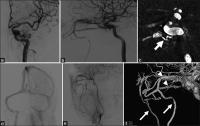 Figure 2: Initial digital subtraction angiography and three-dimensional rotational angiography.
(a and b) Early phase of left internal carotid angiography; frontal (a) and lateral
(b) view revealing cavernous sinus dural arteriovenous fistula. (c) Multiplanar reconstruction
of three-dimensional rotational angiography shows the feeder from the meningeal branch
of the left internal carotid artery (arrow) and shunt pouch (asterisk). (d-f) Left
internal carotid angiography; frontal view at late phase (d), lateral view at intermediate
phase (e), and three-dimensional rotational angiography (f). Cavernous sinus dural
arteriovenous fistula drains to the left facial and deep facial veins (arrows) through
the superior and inferior ophthalmic veins (arrowheads)
Figure 2: Initial digital subtraction angiography and three-dimensional rotational angiography.
(a and b) Early phase of left internal carotid angiography; frontal (a) and lateral
(b) view revealing cavernous sinus dural arteriovenous fistula. (c) Multiplanar reconstruction
of three-dimensional rotational angiography shows the feeder from the meningeal branch
of the left internal carotid artery (arrow) and shunt pouch (asterisk). (d-f) Left
internal carotid angiography; frontal view at late phase (d), lateral view at intermediate
phase (e), and three-dimensional rotational angiography (f). Cavernous sinus dural
arteriovenous fistula drains to the left facial and deep facial veins (arrows) through
the superior and inferior ophthalmic veins (arrowheads)
TVE was performed under intravenous anesthesia with dexmedetomidine. A 5-Fr ENVOY
catheter was placed in the left common carotid artery, and a 6-Fr ENVOY catheter was
placed in the left internal jugular vein. Initial left common carotid angiography
showed a drainage different from that seen in diagnostic DSA. The left SOV and left
deep FV, planned as the second route, could not be confirmed; hence, only the tortuous
FV drainage route remained [[Figure 3]]. We tried to approach the left CS from the ipsi- or contralateral IPS, as scheduled,
but could not reach the shunt point. Other visible approach routes could not be confirmed
without the tortuous FV drainage; hence, we approached the left CS from the left FV
route. Subsequently, the microguidewire was smoothly advanced in the angiographically
occlusive angular vein (AV) and SOV, and it reached the shunt point [[Figure 4]]. We performed coil embolization, and the CS DAVF was completely occluded [[Figure 5]]. The patient's eye symptoms immediately improved. He was followed up for more than
1 year, with no recurrence.
 Figure 3: Intraoperative digital subtraction angiography frontal (a) and lateral (b) view at
late phase of the left internal carotid artery and three-dimensional rotational angiography
(c) The superior ophthalmic vein and the deep facial vein are obstructed (dotted arrow).
Only the tortuous facial route remained
Figure 3: Intraoperative digital subtraction angiography frontal (a) and lateral (b) view at
late phase of the left internal carotid artery and three-dimensional rotational angiography
(c) The superior ophthalmic vein and the deep facial vein are obstructed (dotted arrow).
Only the tortuous facial route remained
 Figure 4: Catheterization to the shunt point of cavernous sinus dural arteriovenous fistula.
(a and b) The microcatheter is advanced to the shunt point in the cavernous sinus
through the occlusive angular and superior ophthalmic vein (dotted arrow). (c and
d) Projection X-ray imaging; frontal (c) and lateral (d) view. (e and f) Selective
angiography from the microcatheter; frontal (e) and lateral (f) view
Figure 4: Catheterization to the shunt point of cavernous sinus dural arteriovenous fistula.
(a and b) The microcatheter is advanced to the shunt point in the cavernous sinus
through the occlusive angular and superior ophthalmic vein (dotted arrow). (c and
d) Projection X-ray imaging; frontal (c) and lateral (d) view. (e and f) Selective
angiography from the microcatheter; frontal (e) and lateral (f) view
 Figure 5: Follow-up digital subtraction angiography and magnetic resonance imaging. (a and
b) Follow-up digital subtraction angiography lateral view; cavernous sinus dural arteriovenous
fistula is completely occluded. (c and d) Magnetic resonance imaging demonstrates
no complication in the follow-up period
Figure 5: Follow-up digital subtraction angiography and magnetic resonance imaging. (a and
b) Follow-up digital subtraction angiography lateral view; cavernous sinus dural arteriovenous
fistula is completely occluded. (c and d) Magnetic resonance imaging demonstrates
no complication in the follow-up period
Discussion
DAVF is a rare arteriovenous malformation disease with an unclear etiology. The elevation
of venous pressure by venous occlusive changes is believed to cause a widening of
physiological anastomosis between the dura maters.[[4]],[[5]] A few cases of DAVF are caused by trauma, infection, surgery, tumor, and venous
thrombosis, but most cases are idiopathic.
The detection rate of DAVF is approximately 0.16–0.51 per 100,000 adults.[[6]],[[7]],[[8]] Previous studies from Western countries have reported that the most frequent location
of DAVFs was the transverse-sigmoid sinus, followed by the CS.[[7]] In contrast, the CS was reported as the most frequent location of DAVFs in Asian
populations.[[1]] Hence, the distribution of the shunt point may vary with regions.
Among patients with CS DAVF, aggressive symptoms were present in only 3% of the cases;
however, almost all of them had clinical symptoms.[[1]] The common clinical symptoms were sixth cranial nerve palsy (77%), exophthalmos
(65%), chemosis (59%), third cranial nerve palsy (59%), visual loss (41%), pulsatile
tinnitus (41%), headaches (18%), and retro-orbital pain (18%).[[2]] DAVFs with retrograde leptomeningeal venous drainages or other annoying symptoms
have been treated with a variety of procedures, including endovascular embolization,
direct surgery, radiation surgery, or a combination of these. The treatments were
primarily endovascular, with success rates of 62%–81% for transvenous approaches.[[9]],[[10]]
Every draining route connecting the CS is a probable approach route. The IPS is the
most common venous route for approaching the CS and could be used even if it is occluded.
In case the IPS approach is infeasible, other approach routes are considered. The
FV is often reported as an alternate route for approaching the CS, and its effectiveness
is well known.[[2]],[[3]] This route is commonly confirmed by angiography, and it usually reaches the CS
through the AV and SOV.
In the present case, the approach from the IPS was infeasible. The deep FV, considered
as the second route, was angiographically occluded in the intraoperative DSA. Only
the tortuous FV drainage route remained. Severe tortuosity and a steep angle at the
junction of the AV and SOV sometimes prevent the passage of a microcatheter from the
FV. However, the microguidewire was smoothly advanced to the CS through the angiographically
occlusive AV and SOV. The microcatheter was advanced to the CS across the microguidewire.
We embolized the shunt point using coils.
The reasons the FV route showed that dynamic angiographic changes for a short period
of time are not yet clear; however, venous thrombosis or a hemodynamic change was
considered. The general condition and vital signs of the patient were similar to those
of diagnostic DSA. An intrajugular catheter was placed, which sometimes stagnates
venous drainage, but there was no venous congestion during the procedure. CS DAVFs
have been reported to show angiographic changes attributable to progressive thrombosis.[[11]] The shortest interval of drainage change was 7 days in this series, which is shorter
than that in previous reports.
The angiographic change possibly showed an early phase of thrombosis, which might
be an important factor for successful treatment. TVE from the FV route is less invasive;
therefore, it is worth trying before attempting to approach other invasive procedures.
Declaration of patient consent
The authors certify that they have obtained all appropriate patient consent forms.
In the form, the patient has given his consent for his images and other clinical information
to be reported in the journal. The patient understands that name and initials will
not be published and due efforts will be made to conceal identity, but anonymity cannot
be guaranteed.


